
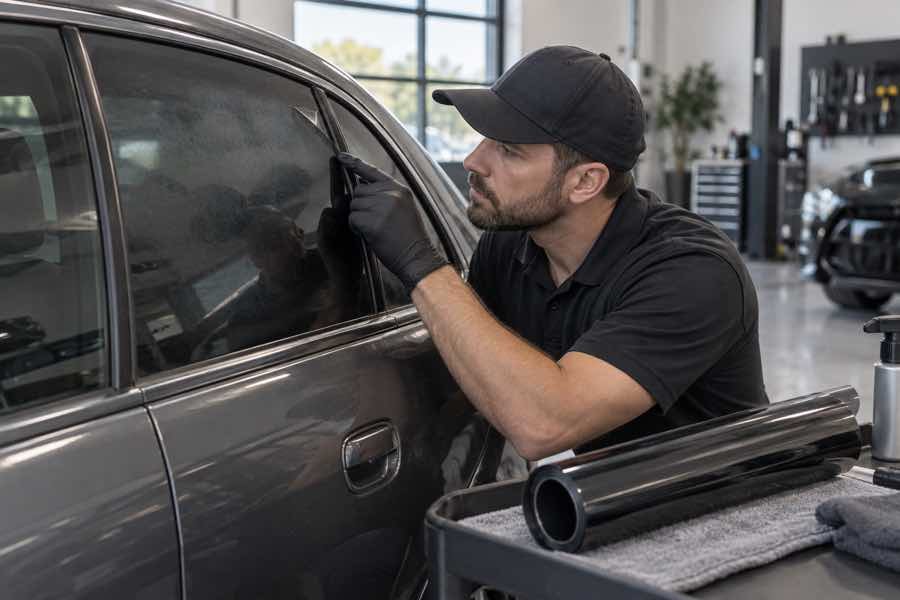
A tiny bubble appears near the corner of your driver’s window. You ignore it. A month later, it has invited three friends and a haze has joined the group chat. Is the tint old, badly installed, or just still drying?
How long does car window tint last? There isn’t one dependable lifespan that applies to every film and vehicle. It depends on the film construction, installation, sun exposure, care, and warranty. Well-made, properly installed film can last for years, but the best way to judge a particular product is to read its written warranty and watch for signs of failure.
Quick answer: Don’t rely on a generic “X years” promise. Find the exact film series, installation date, invoice, and warranty terms. If you see spreading bubbles, peeling edges, discoloration, or haze that affects your view, ask a tint shop to inspect the glass.
Why there’s no universal tint expiration date
Window film does not come with a dashboard countdown. Film types, product quality, glass, climate, installation, and maintenance all differ. Even two cars parked in the same driveway may age differently if one spends more time in direct sun or has a different film series.
Film labels such as dyed, carbon, ceramic, or premium can help describe product lines, but they do not set a guaranteed number of years. Ask the shop for the exact manufacturer and series. The manufacturer’s warranty explains what it covers, how long coverage lasts, and what conditions apply. That is much more useful than a confident guess from a comment section.
What affects how long car window tint lasts?
- Film construction and quality. Products differ in materials, adhesives, coatings, and color technology. Ask for the precise product data and warranty, not just a broad category name.
- Installation quality. Clean glass, correct preparation, careful fitting, and proper curing help determine whether film bonds evenly and stays in place.
- Sun and climate exposure. Repeated heat, sunlight, temperature changes, and local climate can influence a film over time. Warranty terms may also vary by product, installer, or region.
- Cleaning and everyday use. Abrasive tools, harsh chemicals, dirty cloths, and rolling windows down before the film has bonded may damage or lift it.
- Vehicle storage and use. A car parked outdoors all year has a different exposure pattern from one kept in a garage. Window movement, passengers, pets, and cargo can also affect film edges.
Signs your tint may be failing
| What you notice | What it might mean | What to do |
|---|---|---|
| Bubbles that spread or return | Adhesion may be failing, or the film may have a defect. Small moisture pockets can also appear temporarily after a fresh installation. | Compare with the installer’s cure-time instructions. If bubbles remain or grow, photograph them and ask for an inspection. |
| Purple, bronze, or uneven color | Discoloration may indicate aging or breakdown in some films. | Check the warranty for color or discoloration coverage and contact the installer. |
| Edges lifting or peeling | The film may be losing adhesion, or an edge may have been damaged during cleaning or use. | Avoid picking or trimming it. Have a shop inspect the edge and advise whether repair or replacement is possible. |
| Haze or distortion that stays | Could be residue, film damage, or a persistent installation issue. | If it affects your view, get it checked promptly, especially on a driver’s window or windshield. |
New-tint bubbles vs. old-tint failure
Freshly installed film may look hazy or show moisture while it cures. That does not automatically mean the installation failed. The expected curing time depends on the film, glass, temperature, sunlight, and humidity. Follow the installer’s instructions and avoid pressing, scraping, or cleaning the film during its initial bonding period.
For example, 3M’s automotive product care guide says not to open or close the windows or clean them for at least 48 hours after installation. Other products or installers may specify a different period. If the installer’s expected cure time has passed and a bubble remains, spreads, or the edge lifts, contact the shop before trying a DIY fix.
Does a lifetime warranty mean the tint lasts forever?
“Lifetime” is not the same as “nothing can ever happen to this film.” A warranty is a written agreement with specific coverage, exclusions, eligibility requirements, and a claim process. It may depend on the exact film, professional installation, original ownership, location, proof of purchase, or required warranty registration.
3M’s U.S. and Canadian automotive window film warranty card, for example, directs customers to the installer first for a claim and requires the warranty card and original invoice. 3M describes coverage for certain films while the original owner owns the vehicle when installed by an authorized installer. Other brands can use different terms. Get the actual warranty for your film series in writing and keep the paperwork with your vehicle records.
How to help tint last longer
- Give new film time to bond. Keep the windows closed and avoid cleaning until your installer says it is ready.
- Use soft, clean materials. Choose a microfiber cloth and a cleaner approved for your film. Avoid abrasive pads, scrapers, and dirty towels.
- Clean gently around the edges. Heavy scrubbing or catching an edge can lift the film.
- Ask before applying stickers or suction cups. Some manufacturers warn against attaching items to the film surface.
- Keep your warranty documents. Record the film series, installation date, shop, invoice, and warranty card.
Our guide to cleaning tinted windows safely covers cleaners, cloths, and aftercare in more detail.
When should you replace window tint?
Replacement makes sense when tint is peeling, persistently hazy, discolored, badly bubbled, or interfering with safe visibility. You may also choose to replace it if the current shade no longer fits your needs or if you discover it does not comply with the rules for your vehicle and location. A tint shop can tell you whether one window needs attention or whether the film should be removed from several windows.
Rear windows deserve extra care because defroster or antenna lines can be damaged during removal. Before authorizing removal, ask the shop how it handles those lines and whether old film removal is included in the quote. See our guide to removing window tint for more on when professional help is the safer choice.
Questions to ask before your next installation
- What exact manufacturer and film series are you installing?
- What does the manufacturer’s written warranty cover, and what is excluded?
- Does coverage require an authorized installer or warranty registration?
- How long should I wait before rolling down the windows and cleaning?
- What should I do if bubbling, discoloration, or peeling appears?
- Can I get the product name, installation date, and warranty details on my invoice?
If you want to maintain your tint between cleanings, compare film-safe glass cleaners and microfiber towels. Check that the products are compatible with your film and follow the label. Some links in this article are affiliate links. As an Amazon Associate, Window Tint Locator earns from qualifying purchases.
Getting a fresh installation? Browse the Window Tint Locator listings and ask shops to identify the film series, written warranty, and aftercare steps in your quote.
Leave a Reply
You must be logged in to post a comment.