You buy a used SUV, admire the dark rear windows, and think: “Great—privacy tint already included.” Then you drive into the afternoon sun and discover the cabin still feels like a greenhouse with excellent manners. What gives?
Factory privacy glass and aftermarket window film can look similar from the sidewalk, but they are made differently and do different jobs. The dark glass that comes on many SUVs, vans, and crossovers is often designed mainly to reduce visibility into the cabin. Aftermarket film is a separate layer installed on the glass; depending on the exact product, it can add heat rejection, UV protection, glare reduction, privacy, or a combination.
Quick answer: factory privacy glass is part of the glass itself, while aftermarket tint is a film applied to the glass. Privacy glass can make rear windows darker, but darkness alone does not tell you how much solar heat or UV the window blocks. If comfort is your goal, compare published performance data for the glass-and-film combination—not just the shade name.
Fast rule of thumb: If you want to see less into a rear cabin, factory privacy glass may already do that. If you want measurable heat or UV performance, ask about the exact glass and film data. If you want both, a clear or light film may be an option, subject to state law and installer guidance.
What is factory privacy glass?
Factory privacy glass is darkened glass installed during vehicle production, typically on rear side windows and the rear hatch glass. The color is built into the glass rather than supplied by a removable polyester film on the inside surface. It gives the vehicle a consistent dark appearance and makes it harder to see the cabin from outside.
“Privacy glass” describes the look and privacy function; it is not a standardized promise about cabin temperature, infrared rejection, or UV protection. Different vehicles and glass packages can behave differently. Some factory glass is designed with solar-control properties, but you should check the specific vehicle’s documentation or measured data instead of assuming every dark window has the same performance.
What is aftermarket window tint?
Aftermarket tint is a thin film applied to the inside of an existing window. Automotive films come in several constructions and shades. Product lines may be dyed, metallized, ceramic, or use other layers and technologies. Their performance depends on the specific model of film, glass, shade, and installation—not on one broad label alone.
Some films mainly change appearance and reduce glare. Others are designed to reject more solar energy while remaining relatively light. Manufacturers publish data such as VLT (visible light transmission), TSER (total solar energy rejection), and UV rejection. For example, 3M defines TSER as the percentage of total solar energy rejected by filmed glass and notes that its example performance figures depend on the glass used. Its automotive film guide and performance notes show why comparing only shade can miss the point.
Factory privacy glass vs. aftermarket tint
| Question | Factory privacy glass | Aftermarket film |
|---|---|---|
| How is it made? | The glass itself is darkened during manufacturing. | A separate film layer is professionally or DIY-applied to the glass. |
| Main purpose | Often privacy and a darker exterior appearance. | Can be selected for privacy, glare, UV, heat control, or appearance. |
| Can it be removed? | Not like a film; changing it generally means replacing glass. | Yes, though removal can take time and may be delicate near defroster lines. |
| Does darkness prove heat rejection? | No. Appearance alone does not describe the glass’s full solar performance. | No. Compare the product’s documented performance on glass similar to yours. |
Does privacy glass block heat?
It may reduce some incoming light and solar energy, but you cannot reliably infer heat performance from how dark it looks. A dark window can be excellent at hiding the cargo area and only so-so at keeping the cabin comfortable. Conversely, some clear or light automotive films are engineered to reject solar energy without making the window dramatically darker.
That is why automotive film makers distinguish VLT from TSER and infrared metrics. VLT is about visible light; it is not a heat score. 3M’s published guidance explains that TSER applies to filmed glass, and that performance figures depend on the glass used. A manufacturer’s spec sheet is more useful than “this one feels premium” or an online claim about a film category.
LLumar describes its clear AIR film as a product intended to enhance automotive glass, including factory privacy glass, with additional heat control while retaining the existing look. That is a product-specific example—not a guarantee that every clear film fits every window or vehicle. See LLumar’s clear automotive film information and ask a dealer for performance data for the exact series and glass.
Can you tint over factory privacy glass?
Often, an installer can apply film over existing privacy glass, but the result is darker because the glass and film combine. This is where a quick “let’s add 20%” decision can produce a much darker final result than you pictured—and may not meet the rules where the vehicle is registered or driven.
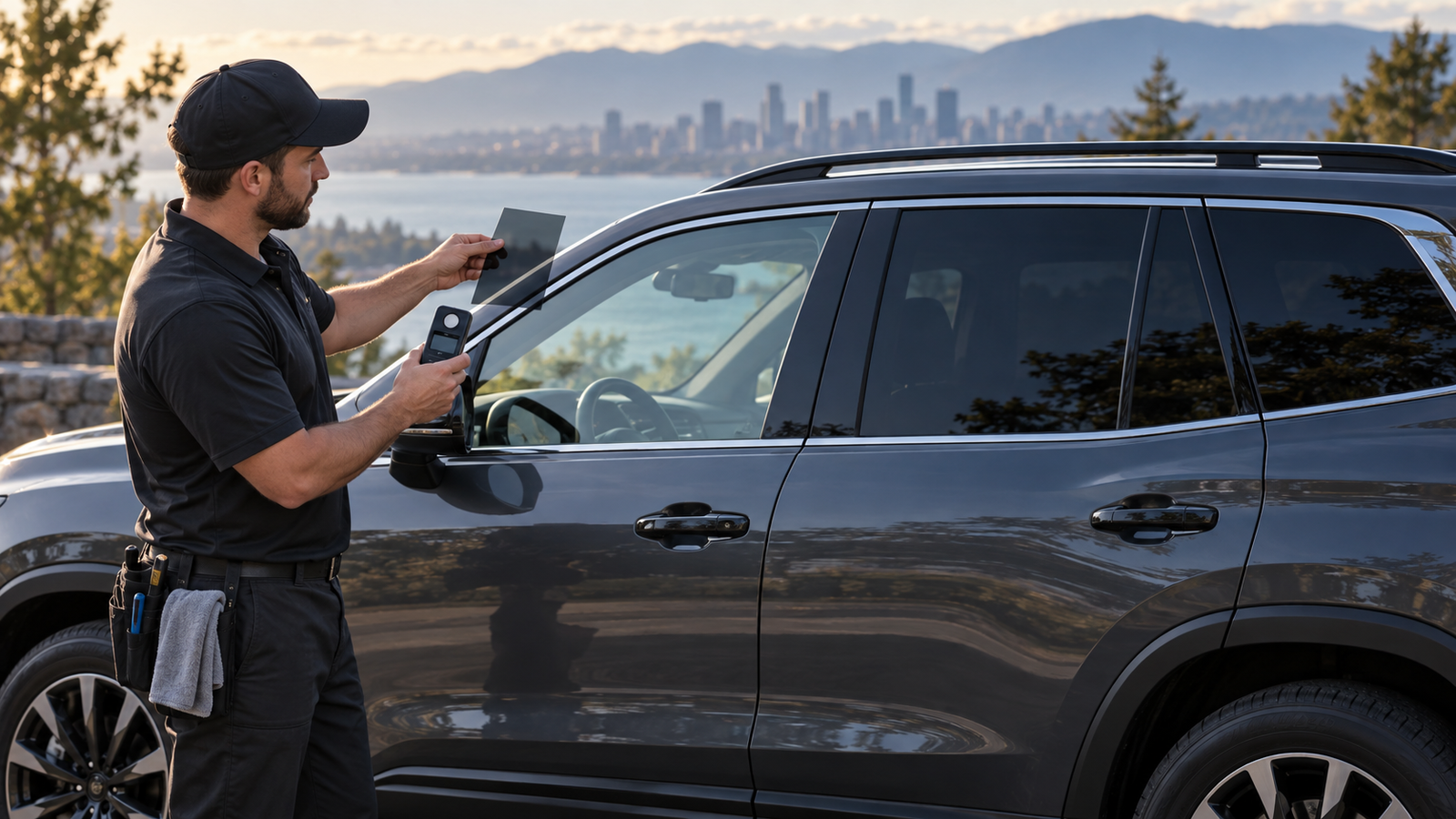
Ask the shop to measure the current window and explain the expected final VLT for each pane. The nominal number printed on a film sample refers to the film or a specified test setup; it does not necessarily equal the final reading over your SUV’s glass. Our window tint percentage guide explains how VLT works. Check local law before ordering; our guide to researching window tint laws shows what to verify.
Which option fits your goal?
- You want privacy from outside: Keep the factory glass if it already gives you the look you want. A film can increase privacy further, but check the final shade and legal limit.
- You want a cooler cabin: Ask for a product comparison using TSER and full-glass performance data. Don’t use darkness as a shortcut for heat rejection.
- You want UV protection: Request the manufacturer’s UV data for the exact product and glass combination. Avoid assuming all dark glass has the same protection.
- You want to keep the factory appearance: Ask whether a light or clear film is available and how it changes the window’s color from inside and outside.
- You want the lowest cost: Compare quotes for the same windows, film series, warranty, and removal work. A cheap “ceramic” label without a product name is hard to evaluate.
Three questions to ask the tint shop
- What exact film series are you recommending? Get the brand and series on the quote.
- What is the measured VLT now, and what should it be after installation? Ask about each window, especially where factory glass is already dark.
- Can you show me performance data for this film on comparable glass? Look for TSER, UV rejection, and the stated test glass, not just a broad “IR rejection” headline.
If you want to check an existing window yourself, you can compare automotive VLT meters. Treat a consumer meter as a screening tool, not official certification; measurement procedure and local rules matter. Some links in this article are affiliate links. As an Amazon Associate, Window Tint Locator earns from qualifying purchases.
Bottom line: factory privacy glass gives you dark glass built into the vehicle; aftermarket film gives you another layer with product-specific options. They can work together, but the combined shade is only one part of the story. Decide what you want the windows to do, confirm the finished measurements, and ask for real product data before the shop breaks out the squeegee.
Leave a Reply
You must be logged in to post a comment.