
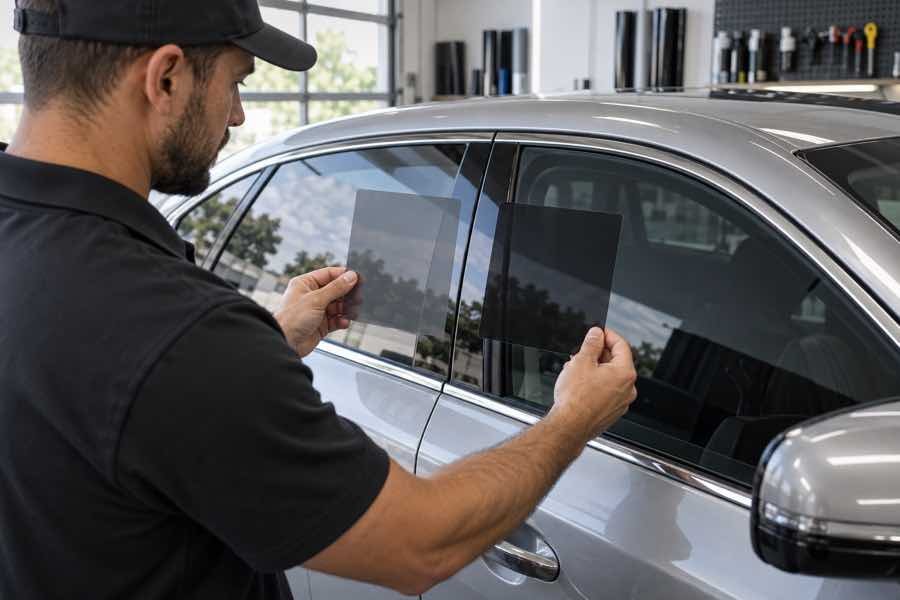
When you compare ceramic vs. carbon window tint, you are comparing product descriptions, not two universal performance grades. The film’s exact construction and published test data matter more than the label. A ceramic product may be worth its higher quote if its measured solar performance and appearance match your needs. A carbon product may offer the look and performance you want at a lower price. Ask for the data sheet for the exact series before deciding.
Quick answer: Ceramic films are often marketed around infrared and solar heat performance. Carbon films are often chosen for their charcoal appearance and value. These are common market positions, not guarantees: products vary, and some product lines combine technologies. Compare test values, warranty, final VLT, and the installed price.
Ceramic vs. carbon window tint at a glance
| What to compare | Ceramic film | Carbon film | What matters most |
|---|---|---|---|
| Heat performance | Often positioned as a premium heat-control option; results depend on the specific film. | Can also reduce solar heat; performance varies by series and shade. | Compare the same published metric for each exact product. |
| Appearance | May be offered in neutral-looking shades, depending on the line. | Often marketed with a charcoal look, depending on the line. | View a sample on similar glass in daylight and from inside. |
| Electronics | Some ceramic products are non-metalized; check the specification. | Some carbon products are non-metalized; check the specification. | Ask whether the exact film contains metal and what the maker says about signal compatibility. |
| Price | Often quoted in a premium tier, but local pricing varies. | May be a lower-cost alternative, depending on the shop and product. | Compare written quotes for the same vehicle and window coverage. |
| Best way to choose | Consider when its measured performance justifies the price for you. | Consider when the appearance, data, warranty, and quote fit your priorities. | Choose by product data and installation quality, not the category name alone. |
This is a general comparison. Marketing terms are not a substitute for the product’s technical data sheet; claims and test methods differ between brands.
What is ceramic window tint?
Ceramic tint is a broad product category that typically uses ceramic particles or related non-metallic technology in the film. Manufacturers often market ceramic lines for heat control while maintaining a lighter or more neutral appearance. That does not mean every ceramic film outperforms every carbon film. The exact series and test results determine the comparison.
For example, 3M’s Ceramic IR technical data sheet reports results for specific shades applied to reference glass. It reports total solar energy rejection (TSER) alongside visible light transmission (VLT), and notes that the figures are tied to specified glazing and test conditions. Use the 3M Ceramic IR technical data sheet as an example of the kind of documentation to request—not as a scorecard for every ceramic product.
What is carbon window tint?
“Carbon” is commonly used to describe a film line’s material or appearance, but it is not a standardized rating for heat rejection, durability, or color. One shop’s carbon option may not use the same construction or have the same performance as another shop’s. Ask which manufacturer and series the quote includes, then read that product’s published data.
Film technologies can overlap. 3M’s Color Stable product bulletin, for instance, describes a film with a charcoal color, dye technology, and ceramic nanotechnology. That example is a reminder to compare actual specifications rather than assuming every film fits a simple either-or definition.
How to compare film performance fairly
- Compare VLT. VLT tells you how much visible light passes through. Lower VLT means a darker film, but final glass VLT also depends on the vehicle’s factory glass.
- Compare TSER for overall solar performance. Total solar energy rejected estimates the share of solar energy the tested film-and-glass setup rejects. Check that the numbers use comparable test conditions.
- Read infrared figures carefully. “IR rejection” can refer to different wavelength ranges or test methods. Do not compare percentages unless the definitions and measurement conditions match.
- Check warranty and color information. Ask for the written warranty terms, coverage exclusions, and the maker’s description of expected color stability.
- Ask about metal content. If you rely on a phone, GPS, satellite radio, or toll system, ask the installer and film maker whether the exact product is compatible with your equipment.
- Compare the installed quote. Confirm which windows are included, whether old film removal costs extra, and what aftercare the shop recommends.
Is ceramic tint worth the extra cost?
It may be worth the premium if the exact ceramic product offers a measurable improvement you value—such as better solar performance at a VLT you prefer—and the price fits your budget. It may not be worth paying extra if the quote only says “ceramic” but does not identify the product or provide comparable data.
A fair comparison asks each shop for the exact brand and series, the same window coverage, the expected finished VLT, the written warranty, and a data sheet. Then compare the quoted performance measures on a like-for-like basis. A higher price or a more advanced sounding label is not, by itself, proof of better results.
Questions to ask a tint shop
- What manufacturer and exact film series are included in this quote?
- Can I see the technical data sheet and warranty before booking?
- What are the film’s VLT and TSER values, and what glass was used for the test?
- How will the factory tint on my vehicle change the finished VLT?
- Is the film metalized, and does the manufacturer list any electronics considerations?
- Can I see samples on glass similar to my vehicle’s windows?
If you are comparing DIY options, you can browse automotive ceramic window tint film and review the product details before buying. DIY film requires careful preparation and installation, and it still must comply with the rules for your vehicle and location. Some links in this article are affiliate links. As an Amazon Associate, Window Tint Locator earns from qualifying purchases.
Ready to compare professional quotes? Browse the Window Tint Locator listings and ask nearby shops to quote the exact film series, coverage, and warranty in writing.
Leave a Reply
You must be logged in to post a comment.