
Quick answer: A professional full-car window tint installation in the U.S. can range from roughly $150 to $900 or more for a standard sedan, depending mainly on the film, the vehicle, the windows included, and the installer. Treat that as a planning range, not a guaranteed quote: current published guides use different packages and price tiers, and local quotes can vary.
This guide explains what changes the price, how to compare quotes, and when a DIY kit may make sense. Before booking, confirm what glass is included and check your state’s tint rules.
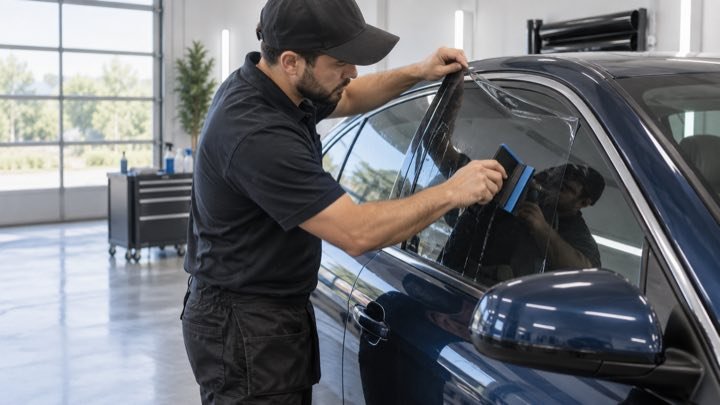
Typical professional car window tint prices
The ranges below summarize currently published U.S. price guides for a full-vehicle installation. The sources differ, so the ranges are intentionally broad. They are not a national price survey, and they do not necessarily include a windshield, sunroof, old-film removal, or unusual glass.
| Film type | Standard sedan planning range |
Larger vehicle planning range |
What to ask about |
|---|---|---|---|
| Dyed | About $150–$300 | About $200–$400 | Film series, warranty, and expected color stability |
| Carbon | About $250–$500 | About $350–$650 | Exact film line and performance data behind the quote |
| Ceramic | About $400–$900+ | About $500–$1,200+ | Film series, included windows, warranty, and comparable heat-rejection measurements |
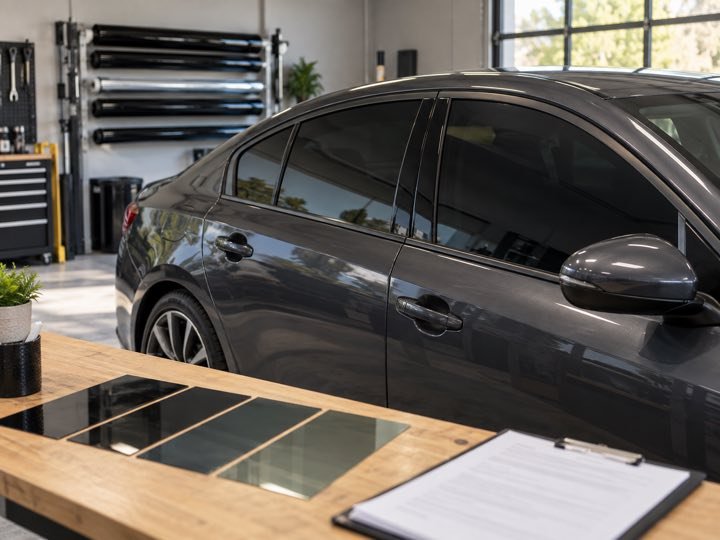
These are useful for setting a budget, but the words “carbon” and “ceramic” do not identify a specific product or guarantee a particular result. Ask the shop for the film manufacturer and series, then compare its published performance data at the same shade. Two quotes only make sense side by side when they cover the same windows and use comparable film.
For additional context, see these published 2026 guides: TintScout’s window tint cost guide and ACT Customs’ car tint price guide. Their ranges differ, which is one reason to use them for budgeting and get a written local quote before deciding.
What makes one tint quote higher than another?
Film and product series
Film choice is often a major part of the price difference. A shop may offer dyed, carbon, ceramic, or premium multi-layer options. Request the exact manufacturer and series rather than comparing a quote labeled only “ceramic” with another shop’s product name. Ask which performance figures the shop uses and whether they are measured on film alone or on film applied to glass.
Vehicle size and glass shape
A larger SUV, truck, or van usually has more glass to cover than a small sedan. Curved rear glass, quarter windows, panoramic roofs, and tight trim can also take more material and installation time. Tell the shop your exact year, make, model, and trim so the estimate reflects your vehicle.
Which windows are included
“Full car” is not always defined the same way. One package might cover the side and rear windows; another may price a sun strip, windshield, or sunroof separately. Ask the shop to list each included pane on the quote. If your vehicle has factory privacy glass, ask how that affects the film choice and final visible-light transmission.
Old tint removal and cleanup
Removing old film can add labor, especially if it is brittle, peeling, or leaving adhesive behind. Ask whether removal is included, how it is priced, and whether the shop can inspect the existing film before confirming the total.
Installer, warranty, and local labor
Quotes can differ by region, shop experience, installation process, and warranty coverage. A low quote is not automatically a bad job, and a high quote is not automatically better. Compare the film, workmanship coverage, what happens if the film develops a problem, and the shop’s examples of similar vehicles.
How to compare quotes without comparing the wrong things
- Ask for the same coverage from every shop: list the windows, and say whether you want a sun strip, windshield, or sunroof included.
- Get the exact film manufacturer and product series in writing.
- Confirm whether old tint removal, adhesive cleanup, and taxes are included.
- Ask what the warranty covers, how long it lasts, and who handles a warranty claim.
- Confirm the selected shade is legal for your vehicle and location. Rules can differ by window and vehicle type.
- Ask how the shop measures the finished tint and whether existing glass tint is included in that measurement.
Is DIY tint cheaper?
DIY can reduce labor cost, but the film price is only part of the project. You may also need tools, practice material, time, and replacement film if a panel is cut or installed poorly. Curved rear glass and clean edges can be challenging, especially on a first attempt. A professional quote may also include product support and workmanship coverage that a DIY purchase does not.
If you are considering the DIY route, compare a precut window tint kit with a basic tint installation tool kit. Check that the film is made for your exact vehicle, confirm the included shade and window coverage, and read the return terms before ordering. These are options to compare, not a substitute for checking fit or local tint laws.
Some links above are affiliate links. We may earn a commission if you buy through them. As an Amazon Associate I earn from qualifying purchases.
When is ceramic tint worth the extra cost?
Ceramic film may be worth comparing when your priority is solar and infrared performance, or when you want a lighter shade with specific performance characteristics. The right comparison is the actual data for the film series and shade you are considering—not just “ceramic” on a price list. If your main goal is a darker appearance, ask whether a less expensive film can meet that goal while staying within the law.
Bottom line
For a first budget, expect professional full-car tint to vary widely by film and vehicle; current published U.S. guides put many standard-sedan packages from the low hundreds into the upper hundreds, with premium options and complex vehicles sometimes going above $1,000. The most useful next step is to request two or three written quotes for identical coverage and film tiers. Window Tint Locator can help you find tint shops near you so you can compare the details.
Sources and pricing note
Planning ranges in this article were compared against TintScout’s 2026 U.S. guide and ACT Customs’ 2026 guide. Price pages and shop packages can change. This article was prepared in September 2026; confirm current coverage and price directly with the installer before booking.